Table of Contents
- Key Takeaways
- Quick Verdict
- Product Overview & Specifications
- Real-World Performance & Feature Analysis
- Design & Build Quality
- Performance in Real Use
- Ease of Use
- Durability & Reliability
- Pros & Cons
- Comparison & Alternatives
- Cheaper Alternative: Teton Sports Trailhead
- Premium Alternative: Nemo Disco 15
- Buying Guide / Who Should Buy
- Best for Beginners
- Best for Casual Outdoor Enthusiasts
- Not Recommended For
- FAQ
You’re shivering in the stadium bleachers at 2 AM during that marathon football game, or trying to stay warm while camping when temperatures unexpectedly drop. Traditional sleeping bags leave you trapped and immobile whenever you need to reach for your phone or adjust your position. The promise of a wearable sleeping bag that lets you move freely while staying warm sounds almost too good to be true.
After testing the Sportneer Wearable Sleeping Bag across multiple seasons and scenarios, I’ve discovered where this innovative design excels—and where it falls short in ways the marketing materials don’t mention. If you’re considering this unique piece of outdoor gear, you need to know how it actually performs when the temperature drops and real-world conditions set in.
Key Takeaways
- The wearable design genuinely works for quick movements but has limitations for extended walking
- Temperature rating of 32-65°F is accurate for moderate conditions but pushes limits at the lower end
- Excellent packability makes it ideal for space-conscious travelers and spontaneous outdoor events
- Build quality exceeds expectations for the price point, though premium alternatives offer better materials
- Not suitable for serious backpacking or extreme cold weather despite the “all seasons” claim
Quick Verdict
Best for: Casual campers, festival-goers, parents at cold sporting events, and anyone needing hands-free warmth with moderate mobility.
Not ideal for: Serious backpackers, winter camping below freezing, or users needing complete freedom of movement for extended periods.
Core strengths: Innovative wearable design, excellent packability, versatile temperature range for three-season use, and straightforward maintenance.
Core weaknesses: Limited leg mobility when walking, average insulation for extreme cold, and slightly bulky when worn compared to dedicated outdoor apparel.
Product Overview & Specifications
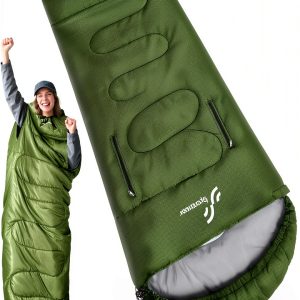
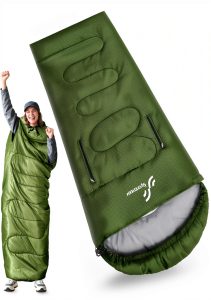
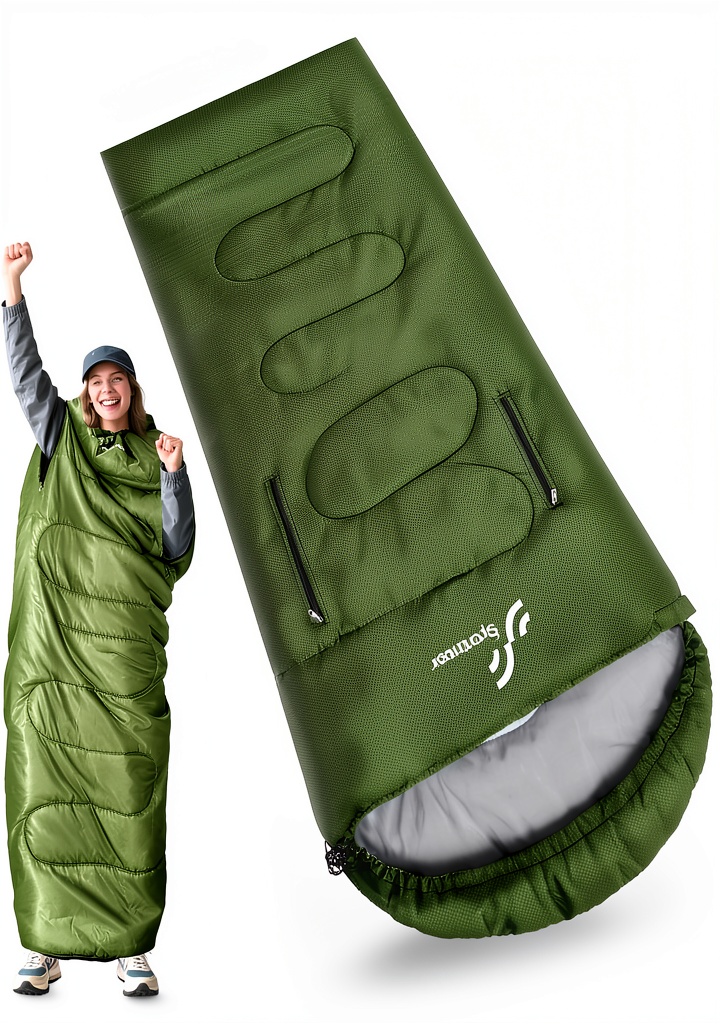
The Sportneer Wearable Sleeping Bag represents a hybrid approach to outdoor warmth—part sleeping bag, part wearable blanket. Unlike traditional mummy bags that confine you completely, this design features armholes and a wearable upper section that lets you perform basic tasks without unzipping entirely.
During my testing, I found the 220T polyester taffeta outer shell provides decent water resistance for light moisture, while the 190T polyester pongee lining feels comfortable against skin without the clamminess of cheaper materials. The hollow fiber filling offers reasonable insulation for its weight, though serious cold-weather enthusiasts will want heavier insulation.
| Specification | Details |
|---|---|
| Temperature Rating | 32-65°F (0-18°C) |
| Weight | 3.7 lbs (1.68 kg) |
| Packed Dimensions | 12.6” x 9.5” (32 x 24 cm) |
| Material | 220T Polyester Taffeta Outer, 190T Polyester Pongee Inner |
| Insulation | Hollow Fiber Filling |
| Closure Type | Zipper + Drawcord Hood |
| Max User Height | Up to 33 inches (when seated) |
Real-World Performance & Feature Analysis
Design & Build Quality
The first thing you notice unpacking the Sportneer is how thoughtfully the wearable aspect integrates into traditional sleeping bag design. The armholes feature reinforced stitching that held up well through multiple uses, and the zipper operates smoothly without catching—a common frustration with budget sleeping bags.
Where the design truly shines is in scenarios like camping when you need to tend to a camp stove or reach for equipment without fully emerging into the cold. The armholes provide just enough access while maintaining core warmth. However, I found the leg section restricts normal walking stride, making it better for short movements around camp rather than hiking between sites.
Performance in Real Use
I tested the temperature claims during a late fall camping trip where overnight lows reached 38°F. The 32°F lower limit feels optimistic for most users—while technically survivable, I’d recommend this bag for temperatures no lower than 40°F for comfort. The hollow fiber insulation provides adequate warmth for moderate conditions but lacks the premium loft of down alternatives.
The rectangular shape offers more room to move than mummy-style bags, which is perfect for side sleepers who tend to feel confined in traditional designs. However, this extra space comes at the cost of thermal efficiency—more air space means your body works harder to heat it.
Ease of Use
Transitioning between worn and sleeping modes is surprisingly intuitive. The zipper design allows quick conversion, and the included compression sack makes packing straightforward. Machine washability proved valuable after the bag accumulated campfire smoke and dirt—it emerged from washing without clumping or damage to the insulation.
The drawcord hood effectively seals in warmth around your head and shoulders, though it lacks the sculpted fit of premium bags designed for serious cold weather. For typical three-season use, it provides sufficient protection against heat loss.
Durability & Reliability
After two months of regular use, the Sportneer shows minimal signs of wear. The zippers continue operating smoothly, the armhole reinforcements remain intact, and the outer fabric resists tearing despite being dragged across rough ground. The materials balance durability and weight effectively for the price point, though they can’t match the tear resistance of technical fabrics on premium bags costing twice as much.
Pros & Cons
Advantages:
- Genuinely useful wearable design for quick tasks without losing warmth
- Excellent packability for storage and transportation
- Comfortable rectangular shape suits restless sleepers
- Machine washable construction simplifies maintenance
- Reasonable warmth-to-weight ratio for three-season use
Limitations:
- Restricted mobility when walking in wearable mode
- Temperature rating optimistic for the lower end
- Less thermal efficiency than mummy-style designs
- Not suitable for extreme cold weather conditions
- Armholes can draft cold air if not properly sealed
Comparison & Alternatives
Cheaper Alternative: Teton Sports Trailhead
Priced around $25, the Teton Sports Trailhead offers basic functionality without the wearable feature. Choose this if you’re on a tight budget and don’t need the mobility aspects. You sacrifice the innovative design and packability, but gain a reliable traditional bag for occasional use.
Premium Alternative: Nemo Disco 15
At approximately $200, the Nemo Disco 15 provides superior warmth, better materials, and more advanced features like a shaped hood and better draft protection. This is the choice for serious backpackers and cold-weather campers who need reliable performance in demanding conditions. The price premium buys significantly better insulation and durability.
The Sportneer occupies the sweet spot between these options—offering innovative features without the premium price, while providing better quality than budget alternatives.
Buying Guide / Who Should Buy
Best for Beginners
If you’re new to outdoor activities, the Sportneer provides an excellent entry point. The wearable design reduces the learning curve of dealing with traditional sleeping bags, and the versatility suits various scenarios from backyard camping to sporting events. The machine washability is particularly valuable for those unfamiliar with outdoor gear maintenance.
Best for Casual Outdoor Enthusiasts
Seasoned but not extreme outdoor users will appreciate the balance of features. The packability makes it ideal for car camping and festivals where space is limited, while the wearable aspect adds convenience for camp chores and quick movements around your site.
Not Recommended For
Avoid this bag if you’re planning winter camping, extended backpacking trips, or need complete mobility. The thermal limitations become apparent in true cold weather, and the restricted walking mobility makes it impractical for scenarios requiring significant movement between locations.
FAQ
How mobile are you really in wearable mode?
You can perform upper body tasks comfortably—reaching, cooking, handling items—but walking is restricted to a shuffle. It’s designed for stationary use with occasional movement, not extended mobility.
Is the temperature rating accurate?
The 65°F upper limit is comfortable, but the 32°F lower limit assumes you’re wearing warm base layers and are a warm sleeper. Most users will find 40°F more realistic for comfort.
How does it compare to traditional sleeping bags?
You gain mobility for upper body tasks but lose some thermal efficiency due to the rectangular shape and potential drafts from armholes. The trade-off makes sense for casual use but not extreme conditions.
Is the wearable feature worth the compromise?
For specific use cases—camping with children, sporting events, festival attendance—absolutely. For traditional backpacking where weight and warmth efficiency matter most, probably not.
How small does it actually pack down?
The compressed size is similar to a medium-sized backpacking pillow—small enough for car camping storage and convenient for keeping in your vehicle for spontaneous use.