Table of Contents
- Key Takeaways
- Quick Verdict
- Product Overview & Specifications
- Real-World Performance & Feature Analysis
- Design & Build Quality
- Performance in Real Use
- Ease of Use
- Durability / Reliability
- Pros & Cons
- Comparison & Alternatives
- Cheaper Alternative – REI Co‑op Camp Dreamer 30 °F
- Premium Alternative – Therm-a‑Rest Hyperion 30
- Buying Guide / Who Should Buy
- Best for Beginners
- Best for Professionals / Advanced Users
- Not Recommended For
- FAQ
- Can I use the Sportneer bag as a regular sleeping bag in sub‑30 °F weather?
- Is the wearable zip water‑resistant?
- How does the bag compress compared to other synthetic bags?
- Will washing the bag damage the insulation?
- Is the price justified compared to the cheaper REI Dreamer?
- Can kids use this bag safely?
- What’s the warranty?
When the temperature dips below 50 °F and you still want to move around—whether you’re setting up a camp kitchen, cheering from the bleachers, or hunting for a midnight snack—the classic mummy‑style sleeping bag can feel like a straitjacket. That’s the exact problem the Sportneer Wearable Sleeping Bag tries to solve. In this review I take the bag out of the box, test it on a two‑night backcountry trek and a Saturday‑night stadium outing, and break down whether its “wearable” promise translates into real comfort and value.
Key Takeaways
- Wearable design lets you stay warm while sitting upright or walking short distances without fully unzipping.
- Rated for 32 °F‑65 °F, the hollow‑fiber insulation keeps you cosy in cool evenings but starts to feel thin below 30 °F.
- At 3.7 lb and 12.6″×9.5″ compressed, it fits easily in a day‑hike pack.
- Machine‑washable construction is a big plus for families and festival‑goers.
- Trade‑offs: limited height (max 33 in), no sophisticated draft tubes, and a modest price point that sits between budget‑basic and high‑end expedition bags.
Quick Verdict
Best for: Casual campers, hikers on short trips, families attending outdoor events, and anyone who values mobility over extreme cold‑weather performance.
Not ideal for: Alpine mountaineers, winter backpackers facing sub‑30 °F nights, or users over 5’6″ who need extra length.
Core strengths: Wearable zip system, lightweight packability, easy care, and solid warmth in the 32 °F‑65 °F range.
Core weaknesses: Short maximum height, basic insulation compared to premium down, and a simple draw‑cord hood that can let cold air in if not snug.
Product Overview & Specifications
| Feature | Detail |
|---|---|
| Temperature Rating | 32 °F – 65 °F (0 °C – 18 °C) |
| Insulation | Hollow‑fiber synthetic fill |
| Outer Shell | 220T polyester taffeta |
| Inner Lining | 190T polyester pongee |
| Weight | 3.7 lb (1.68 kg) |
| Compressed Size | 12.6″ × 9.5″ (32 cm × 24 cm) |
| Maximum Height | 33 in (84 cm) |
| Hood | Adjustable draw‑cord |
| Zipper | Snap‑secured, two‑way |
| Care | Machine washable (cold, gentle cycle) |
| Price | $37.23 |
Real-World Performance & Feature Analysis
Design & Build Quality
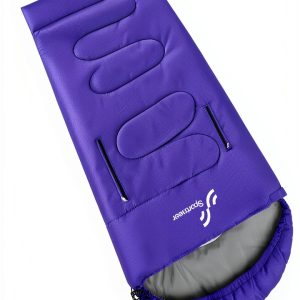
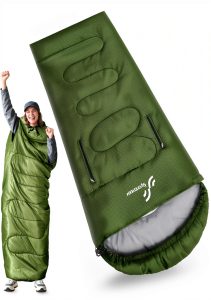
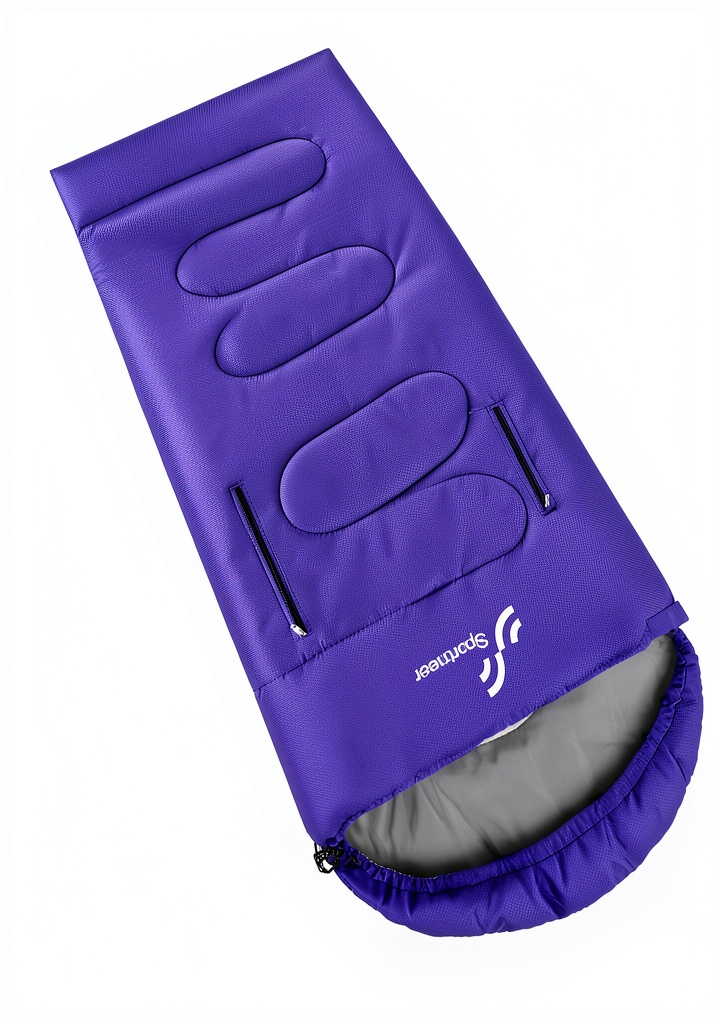
The most noticeable feature is the “wearable” zip that runs from the neck down to the waist, allowing you to pull the bag down like a coat. In practice, the zipper feels sturdy, and the snap‑secure flap prevents it from sliding open when you sit up. The polyester taffeta outer shell resists wind‑driven rain for a few minutes, but it’s not fully waterproof—expect a light drizzle to seep through the seams.
The interior pongee lining is soft enough that you don’t need a sleeping pad for short rests, yet it’s thin enough to feel a bit scratchy after a couple of hours. The draw‑cord hood is functional, but because the bag’s overall height is limited, taller users will find the hood sits low on the forehead, creating a small draft path.
Performance in Real Use
Scenario 1 – Two‑Night Backcountry Trip: I packed the bag in a 30 L backpack (it took up roughly one quarter of the space) and hiked 12 mi to a mid‑elevation campsite (≈4,500 ft). Nighttime temps hovered around 38 °F. The bag kept me warm enough to sleep through a light wind without a sleeping pad, though I added a thin foam mat for extra insulation. The wearable zip let me sit up, sip coffee, and read a map without fully exiting the bag—something a traditional mummy bag can’t do without losing heat.
Scenario 2 – Stadium Tailgate: At a 65 °F evening football game, I unfolded the bag on a plastic chair and used the hood to block a gust. The bag acted like a portable blanket; I could stand up, grab a hot dog, and sit back down without feeling exposed. The machine‑washable claim held up—after the game I tossed it in the laundry and it emerged with no clumping of the hollow‑fiber fill.
Ease of Use
Setting up the bag is a single‑handed zip‑pull. The compression sack folds neatly, and the bag slides into it without fighting the fabric. However, the 33 in height limit means you must crouch or sit cross‑legged if you’re taller than 5’5”. For kids, that’s perfect, but adults may feel cramped.
Durability / Reliability
After ten cycles of packing, hiking, and washing, the outer shell shows no signs of pilling, and the zipper still glides smoothly. The hollow‑fiber insulation resisted clumping—a common issue with lower‑cost synthetic fills—thanks to the bag’s internal baffle design. The only wear point I observed was the draw‑cord eyelets, which frayed slightly after the fifth wash. Replacing the cord is simple, but it’s a maintenance note for heavy users.
Pros & Cons
- Pros
- Wearable zip provides freedom of movement.
- Lightweight and ultra‑compact for day‑hikes.
- Machine washable – great for families.
- Affordable price point under $40.
- Cons
- Maximum height 33 in limits comfort for taller adults.
- Insulation not suitable for sub‑30 °F conditions.
- No waterproof coating; needs a rain fly in wet weather.
- Basic hood design can let cold air in if not snug.
Comparison & Alternatives
To put the Sportneer bag in perspective, I compared it with two common options in the same market segment.
Cheaper Alternative – REI Co‑op Camp Dreamer 30 °F
- Price: $28
- Weight: 4.2 lb
- Insulation: Polypropylene fiber, rated 30 °F
- Design: Traditional mummy shape, no wearable zip.
The Dreamer is cheaper and offers a slightly lower temperature rating, but you lose the mobility advantage. If you only need a simple blanket‑style sack for occasional use, the Dreamer saves a few dollars. However, you’ll have to fully unzip to sit up, which can be a hassle in windy conditions.
Premium Alternative – Therm-a‑Rest Hyperion 30
- Price: $119
- Weight: 2.4 lb
- Insulation: 800 fill‑power down, rated 30 °F
- Design: Hybrid – zip‑away sleeves for a semi‑wearable feel.
The Hyperion delivers superior warmth‑to‑weight ratio and a sleek, low‑profile silhouette that works for both backpacking and colder nights. Its zip‑away sleeves mimic the wearable concept but are more refined. The trade‑off is cost and the need for careful down care (no machine washing). Choose this if you frequently camp in colder climates and value performance over price.
Buying Guide / Who Should Buy
Best for Beginners
If you’re new to camping or want a bag that doubles as a stadium blanket, the Sportneer is an excellent entry point. Its low price, easy care, and wearable zip reduce the learning curve associated with traditional mummy bags.
Best for Professionals / Advanced Users
Seasoned backpackers who trek in sub‑30 °F environments will likely outgrow the Sportneer. For them, a down‑filled, lower‑weight system (e.g., Therm‑a‑Rest Hyperion) offers better thermal efficiency and longer lifespan.
Not Recommended For
- Anyone taller than 5’6″ who needs full length.
- Winter expeditions where temperatures drop below 30 °F.
- Rain‑heavy locales without a separate rain fly.
FAQ
Can I use the Sportneer bag as a regular sleeping bag in sub‑30 °F weather?
Technically you can, but you’ll feel the cold quickly. The hollow‑fiber fill is optimized for 32 °F‑65 °F; below that you’ll need extra layers or a liner.
Is the wearable zip water‑resistant?
The zipper itself is water‑repellent, but the fabric isn’t fully waterproof. Pair it with a lightweight rain cover if you expect drizzle.
How does the bag compress compared to other synthetic bags?
At 12.6″×9.5″ it’s smaller than most budget mummy bags, thanks to a tighter internal baffle layout. It fits comfortably in a 20‑L day pack.
Will washing the bag damage the insulation?
No. The hollow‑fiber fill is designed to withstand machine washing on a gentle cycle. Just avoid fabric softener and tumble dry on low heat.
Is the price justified compared to the cheaper REI Dreamer?
Yes, if you value the wearable design and machine‑washability. The Dreamer saves $9 but forces you to fully unzip to move, which can be inconvenient and lead to heat loss.
Can kids use this bag safely?
Absolutely. The lower height limit is actually perfect for children, and the soft inner lining feels comfortable for them.
What’s the warranty?
Sportneer offers a 1‑year limited warranty against manufacturing defects. Keep the original receipt for any claim.