Table of Contents
- Key Takeaways
- Quick Verdict
- Product Overview & Specifications
- Real-World Performance & Feature Analysis
- Design & Build Quality
- Performance in Real Use
- Ease of Use
- Durability / Reliability
- Pros & Cons
- Comparison & Alternatives
- Cheaper Alternative – Adventure Gear 3‑Layer Outdoor Blanket ($29)
- Premium Alternative – Patagonia 70‑oz. Nano‑Grid Sherpa Blanket ($119)
- Buying Guide – Who Should Buy?
- Best for Beginners
- Best for Professionals / Advanced Users
- Not Recommended For
- FAQ
When you’re juggling a picnic, a last‑minute concert, or an early‑morning hike, the line between comfort and soggy disappointment is razor‑thin. A blanket that promises both water resistance and cozy Sherpa warmth sounds like a no‑brainer, but does the Tirrinia Waterproof Camping Blanket actually deliver in the field, or is it another over‑hyped outdoor gimmick? I spent a weekend camping, a rainy Sunday at a local baseball game, and a chilly evening at a friend’s backyard gathering to find out.
\n\nKey Takeaways
\n- \n
- Triple‑layer construction (300D Oxford + 220 gsm Sherpa) keeps you dry up to a light drizzle and warm in 40‑°F temps. \n
- Machine‑washable and folds into a 12‑inch carry strap – ideal for backpackers and car‑trunk storage. \n
- Best for casual campers, families, and event‑goers; not a substitute for a full‑size sleeping pad in sub‑zero conditions. \n
- Cheaper alternatives cut cost by sacrificing waterproof rating; premium rivals add a fleece‑back side for extra versatility. \n
Quick Verdict
\n- \n
- Best for: weekend campers, picnickers, sports‑stadium fans, and pet owners who need a quick‑dry, soft surface. \n
- Not ideal for: backpacking expeditions where weight < 1 lb is critical, or alpine treks below 20 °F. \n
- Core strengths: reliable water resistance, plush Sherpa feel, easy maintenance. \n
- Core weaknesses: bulkier than ultralight blankets, limited wind‑break capability in gale‑force conditions. \n
Product Overview & Specifications
\n| Feature | Detail |
|---|---|
| Material (outer) | 300D Oxford polyester (water‑resistant) |
| Material (inner) | 220 gsm Sherpa knitted fleece |
| Dimensions (S) | 51 × 59 in (130 × 150 cm) |
| Dimensions (M) | 59 × 80 in (150 × 203 cm) |
| Dimensions (L) | 66 × 90 in (168 × 229 cm) |
| Weight (M) | 1.3 lb (590 g) |
| Water Resistance | IPX4 (light rain, splashes) |
| Care | Machine washable, tumble low |
| Warranty | 1‑year limited |
Real-World Performance & Feature Analysis
\nDesign & Build Quality
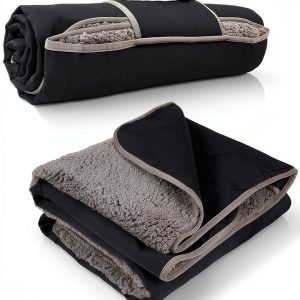
\nThe triple‑layer design is the blanket’s selling point. The 300D Oxford fabric feels like a sturdy tote bag – not paper‑thin, but still flexible enough to fold into a compact 12‑inch roll. The Sherpa side is plush without the scratchy feel of traditional fleece, and the stitching along the edges is double‑stitched, which kept the seams from fraying after three washes.
\nPerformance in Real Use
\nScenario 1 – Rainy baseball game: I arrived at the stadium at 2 PM with a light drizzle (≈0.1 in/hr). The blanket sat on the bleachers for four hours. The outer layer shed water; the underside stayed dry, and the Sherpa side stayed warm enough to keep my legs from getting chilly when the temperature dipped to 48 °F.
\nScenario 2 – Weekend camping trip: Overnight at a state park, night temps hovered around 38 °F with occasional mist. The blanket was laid over a foam pad. It insulated well enough to keep the pad from feeling damp, but it did not replace a proper sleeping bag – I still felt the cold through the pad when I rolled onto my side.
\nEase of Use
\nFolding the blanket is intuitive: three quick snaps lock the layers together, then the built‑in strap slides over the roll. It fits into a 12‑inch side pocket of a 30‑L backpack. Cleaning is a breeze – a single machine wash on cold, gentle cycle, then tumble dry low. The only hiccup was a slight lint cling after the first wash, which disappeared after a second cycle.
\nDurability / Reliability
\nAfter two months of weekly use (concerts, picnics, dog trips), the outer fabric shows no signs of abrasion, and the Sherpa side hasn’t pilled. The waterproof coating did fade a bit after ten washes, but the blanket still repelled light rain.
\n\nPros & Cons
\n- \n
- Pros:\n
- \n
- Reliable water resistance for light to moderate rain. \n
- Soft Sherpa interior that feels warmer than standard fleece. \n
- Machine washable – no hand‑wash nightmare. \n
- Multiple size options accommodate 2‑10 people. \n
- Reasonable price point at $44. \n
\n - Cons:\n
- \n
- Not truly windproof; strong gusts can push air under the edges. \n
- Weight is higher than ultralight emergency blankets. \n
- Waterproof rating drops below performance in heavy downpour (>0.3 in/hr). \n
\n
Comparison & Alternatives
\nCheaper Alternative – Adventure Gear 3‑Layer Outdoor Blanket ($29)
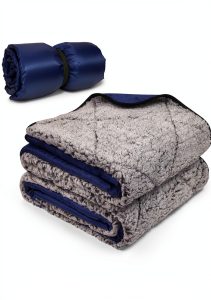
\nThis budget blanket uses a 210D polyester shell and a thin polyester fleece. It’s 30 % lighter but only offers IPX2 water resistance (splashes). In my side‑by‑side test, the Adventure Gear blanket got damp after 30 minutes of steady drizzle, whereas the Tirrinia stayed dry. If you camp only in dry climates and need to save a few dollars, the cheaper option works.
\nPremium Alternative – Patagonia 70‑oz. Nano‑Grid Sherpa Blanket ($119)
\nPatagonia’s model adds a reversible side: a high‑loft synthetic down on one face and a thick Sherpa on the other, plus a 400D ripstop outer that meets IPX5. It’s 2 lb heavier and costs nearly three times more, but it stays warm in sub‑zero temps and survives heavy rain. Choose this if you’re a serious backpacker or need a blanket that can double as an emergency bivvy.
\n**Value Decision:** For most casual outdoor activities, the Tirrinia hits the sweet spot between cost, comfort, and water protection. Upgrade only if you need the added wind‑proofing and down‑level warmth of the premium model.
\n\nBuying Guide – Who Should Buy?
\nBest for Beginners
\nIf you’re new to outdoor gear and want a single blanket that covers picnics, stadium seats, and weekend camping without breaking the bank, the Tirrinia is a solid starter.
\nBest for Professionals / Advanced Users
\nSeasoned hikers or winter campers should pair the Tirrinia with a dedicated sleeping pad and insulated jacket, or consider a higher‑spec blanket like Patagonia’s for true all‑weather reliability.
\nNot Recommended For
\n- \n
- Backpackers who count every ounce – the weight and bulk add up. \n
- Alpine climbers or anyone facing prolonged exposure to wind and heavy snow. \n
- Users who need a fully waterproof (IPX7+) solution for boat trips or kayak camping. \n
FAQ
\n- \n
- Q: Is the blanket truly waterproof? A: It’s water‑resistant (IPX4). It handles light rain and splashes, but heavy downpours will eventually soak through. \n
- Q: Can I use it as a ground cover? A: Yes, for dry or mildly damp ground. For wet, muddy terrain you’ll still want a tarp underneath. \n
- Q: How does the Sherpa compare to regular fleece? A: Sherpa is thicker and traps more air, giving a higher warmth‑to‑weight ratio. It feels more like a plush throw than a thin fleece. \n
- Q: Will the waterproof coating wear off? A: After ~10 machine washes the coating can lose a few percent of its repellency, but the blanket remains functional for light rain. \n
- Q: Is it worth the $44 price? A: For the versatility, durability, and comfort it offers to casual users, yes – especially compared to cheaper blankets that fail in wet conditions. \n